
Restoring and colorizing 1950s photos
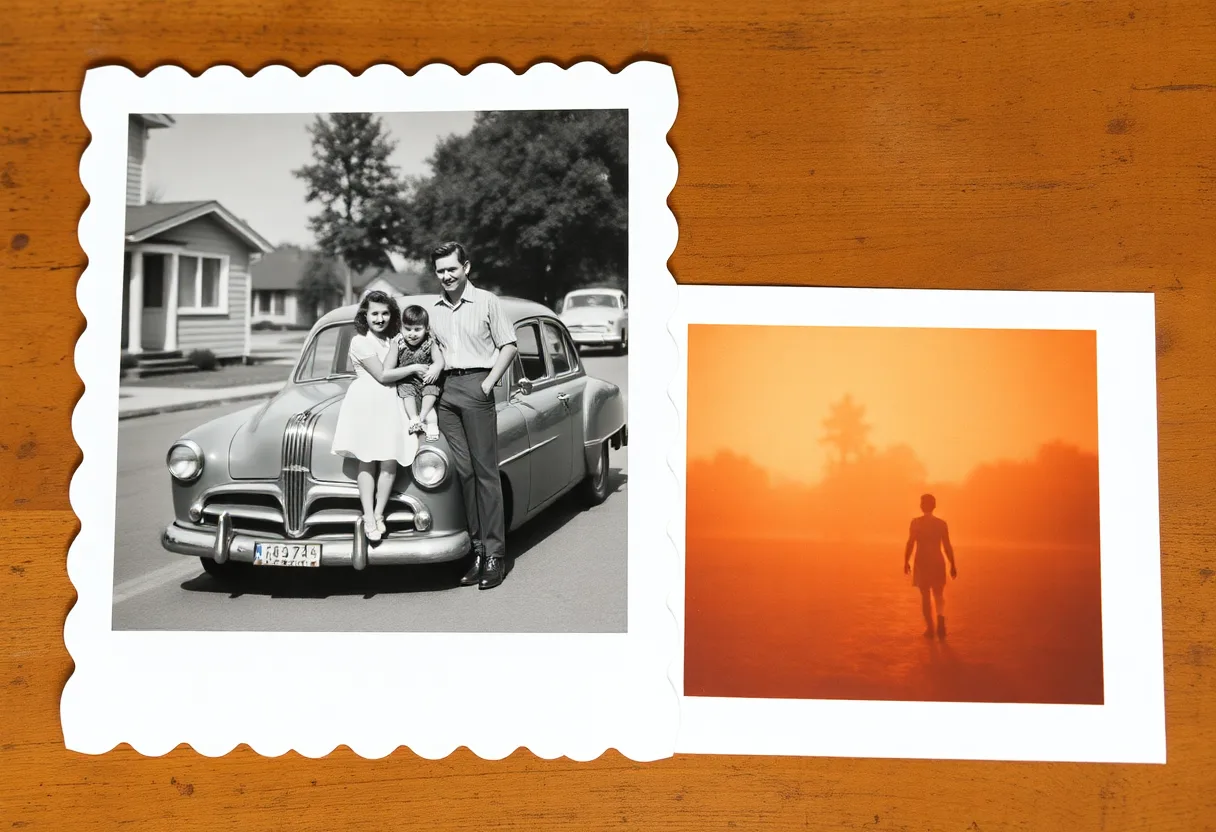
The 1950s were the decade colour arrived in family albums, so a box of prints from then mixes black and white snapshots, early colour prints that have faded badly, and Kodachrome slides that often still look superb.
How photos were made in the 1950s
Black and white roll film was still the everyday choice: cheap, forgiving, and printed by the local chemist, often as square prints with a white scalloped border. Colour negative film such as Kodacolor became affordable during the decade, and many families had their first colour prints made. Enthusiasts shot Kodachrome slides, which needed a projector or a hand viewer to be seen at all.
How 1950s prints have aged
Black and white prints from the 1950s are usually in good condition, because paper and processing had improved. Early colour prints are the casualties: their dyes were unstable, and many have faded to a pale orange or magenta with weak blues. Kodachrome slides kept in their boxes often still hold strong colour, though the projected favourites have faded.
Recognising a photo from the 1950s
- Square or near-square prints with scalloped white borders
- A month and year printed by the processing lab in the border or on the back
- Colour prints with an overall orange or magenta cast and pale skies
Colour: restore it or colorize it?
For black and white prints, colorizers have plenty of reference for the decade’s cars, interiors and clothing, and the results are often convincing. For faded early colour prints, do not colorize: restore. Part of the original colour is still in the dyes, and colour correction recovers it more faithfully than painting new colour over a greyscale copy.
The tool for this decade is Restore old photos.
Questions
Why are my 1950s colour photos so faded?
Early colour print dyes were chemically unstable, and the cyan layer usually faded first, leaving prints orange or magenta with weak blues. Colour correction restores much of the balance because the other layers still hold information.
Should I colorize a 1950s black and white photo?
It often works well, because AI models have plenty of colour reference for the decade’s clothing, cars and interiors. Restore any fading and damage first, then compare the colorized version with the original.
Going deeper
How to colorize black and white photos walks through the method step by step.