
How to fix water damaged photos
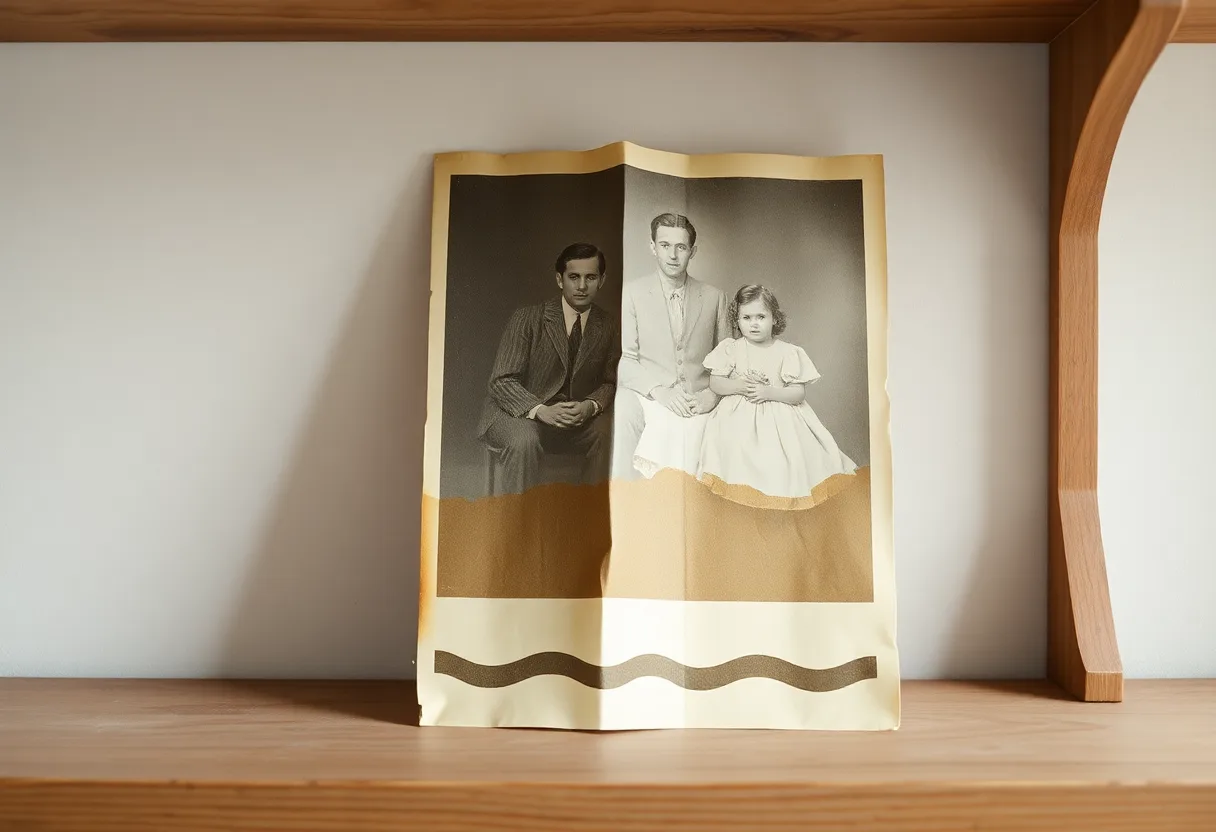
Save the physical print first and fix the digital copy second. A wet photograph survives if you keep it from sticking while it dries; the stains and tide lines it leaves behind are what the repair tool deals with afterwards.
What water does to a photograph
A print is a thin layer of gelatin holding the image, laid on paper. Gelatin swells and softens when wet, so the image layer turns sticky and fragile, and anything it touches while wet can pull it away. As the print dries, dirt and paper size dissolved in the water migrate to the edge of the wet patch and leave a brown tide line. Prints that sat in a flooded basement start growing mould within a couple of days.
Before you photograph it
- Separate wet prints from each other and from glass or plastic sleeves while they are still wet; once dry, stuck prints usually tear
- Rinse muddy prints in cool, clean water, holding them by the edges, and never rub the image side
- Lay them face up on paper towels or a clean towel to air dry, away from radiators and direct sun
- If you cannot dry them all within a day or two, seal them in freezer bags and freeze them, then thaw and dry a batch at a time
Getting a good capture
- Wait until the print is completely dry and flat; a buckled surface catches the light unevenly
- Shoot in soft daylight at a slight angle to the window, because lifted gelatin reflects more than an intact surface
What to run, and in what order
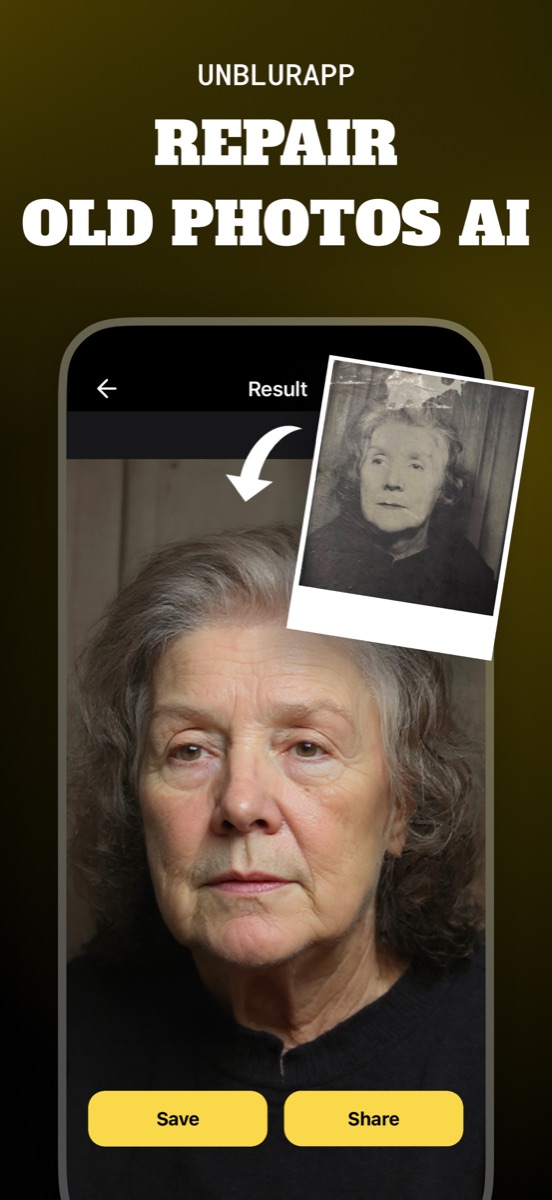
Run Repair on the dried capture. Tide lines and brown stains are the part it handles best, because the image underneath is usually still there, only discoloured. Where the gelatin lifted and took the picture with it, the tool rebuilds the gap from the detail around it. If a stain crossed someone’s face, run Restore Faces afterwards.
The tool for this is Repair a damaged photo.
What to expect
Partly fixable. Stains and tide lines usually clear well. Areas where the image layer washed off entirely are reconstructed rather than recovered, which convinces on a background and is less reliable on a face.
Practical notes
- Photograph every damaged print before handling it further, in case drying or moving it makes things worse
- Store the dried originals in acid-free sleeves, somewhere other than the room that flooded
- Insurers sometimes ask what was damaged, so keep the raw captures alongside the repaired copies
Questions
Can water damaged photos be repaired?
Usually, yes. If the image layer is still on the paper, stains and tide lines clean up well on a digital copy. Where the image washed off completely, a repair tool rebuilds that area from the surrounding photo, which works best on backgrounds.
Should I use a hair dryer on wet photos?
No. Heat makes the softened gelatin shrink and crack unevenly and can fuse the print to whatever it touches. Air drying face up at room temperature is slower and much safer.
Can I freeze old photos that got wet?
Most paper prints, yes: freezing stops mould and buys time when there are too many to dry at once. Do not freeze glass plates, tintypes or daguerreotypes, which can crack or corrode.
Going deeper
How to restore old damaged photos explains the method behind this, including what it cannot fix.